
Bloodgood's Notes #142
Feds 50 bps rate cut gave Bank of China (PBoC) chance to be more aggressive. What follows?

Fundamental Overview
After the Fed cut rates by 50 bps in September, their dovishness gave the People’s Bank of China (PBoC) room to do some easing of their own. Following the Fed, the PBoC announced some fairly aggressive stimulus measures, including lower rates, reducing reserve requirements for banks and more measures to inject liquidity into the market. This isn’t yet anything like the “bazooka stimulus” that China introduced in response to the global financial crisis in 2008, but it’s a step in that direction, one that was sufficient to have an effect on the stock market. As for timing, the reason the Fed cut was probably relevant here is that the PBoC can afford to be more aggressive when the Fed is being more dovish as well; given downward pressure on USD from lower rates in the U.S., stimulus by the PBoC is less likely to negatively impact the Chinese Yen in relation to the USD.
That’s a crucial thing to keep in mind with monetary policy in general: it’s not that central banks copy one another (even though it’s definitely easier for any central bank to justify cutting rates because “look, the Fed did that too!”), but more so that various forms of money printing are largely constrained by one currency’s exchange rate with other currencies. If the USD is set to weaken due to dovish monetary policy, then that gives other central banks room to make their own printers go brrr as well.
Bitcoin
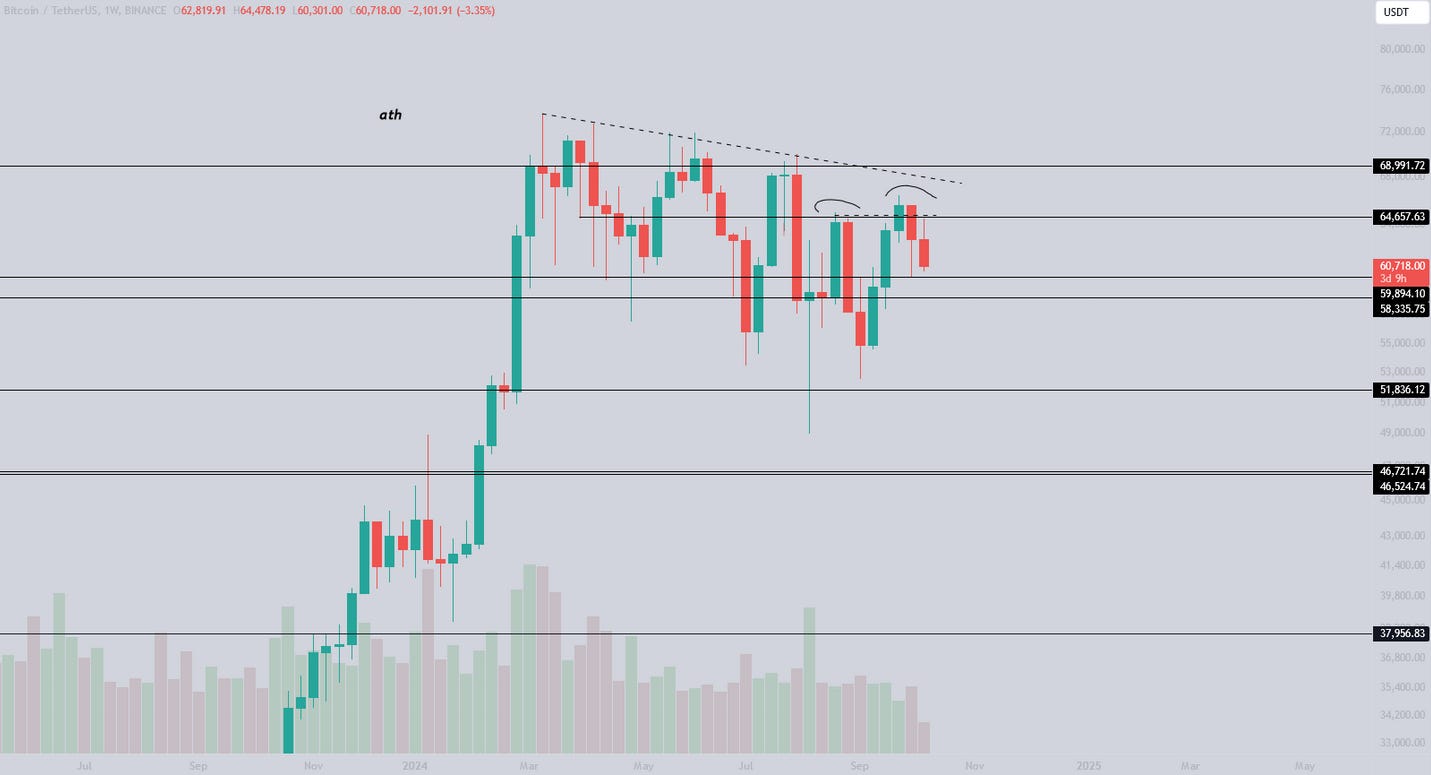
Bitcoin teases traders with a fake breakout above daily resistance.
Since our last analysis, Bitcoin was on its way toward the mentioned resistance at $64.6k. A lot has happened since then—many traders got caught in early longs, and a liquidation event led Bitcoin back to $60k. However, looking at the macro picture, we can see that BTC made a higher high before dropping back down, which is what bulls have been waiting for since May. At the time of writing, we are once again slightly above the support that must hold if we want to see another higher high anytime soon.
In any case, the long-term outlook is bullish as the structure shows signs of a trend change. The short-term is uncertain, but support is a good place to bid.
SPX, Gold, and DXY
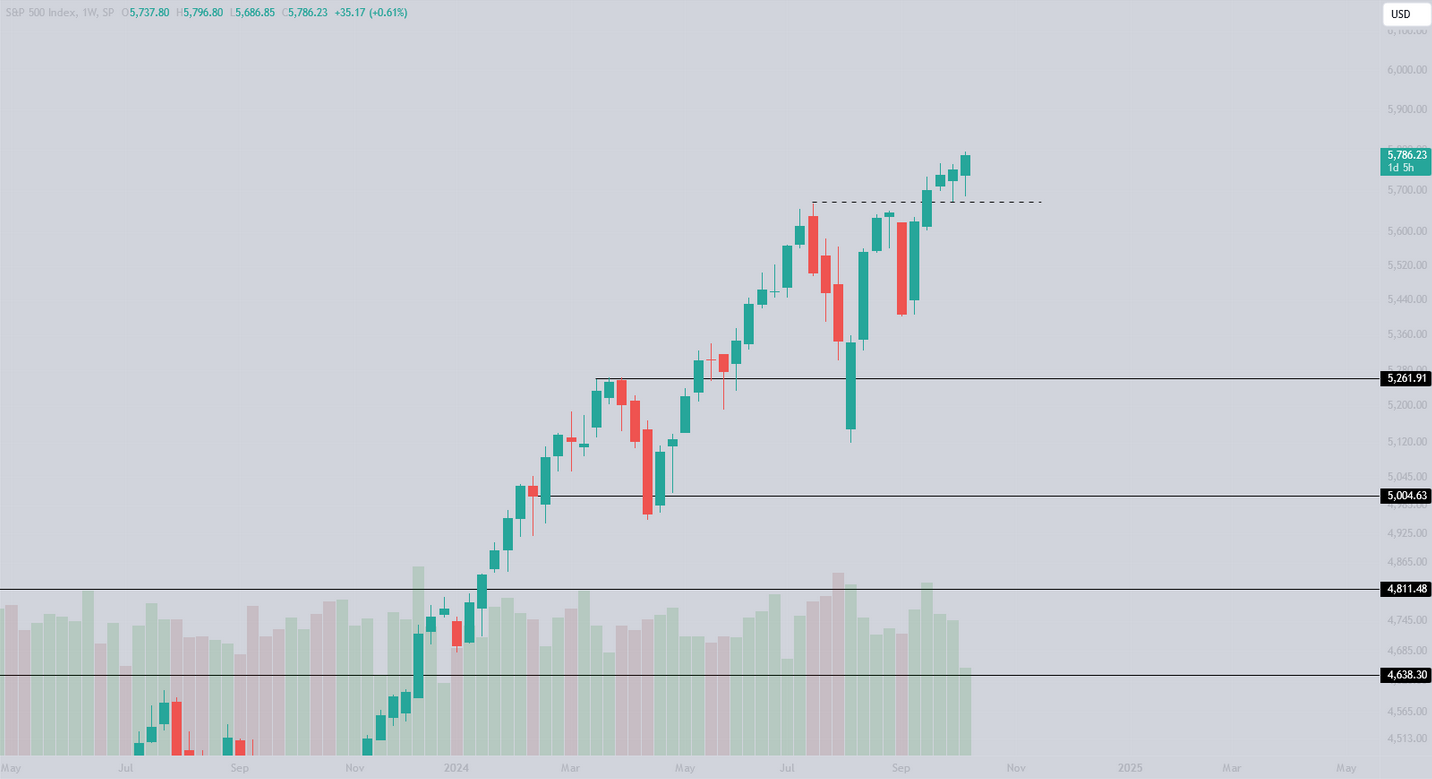
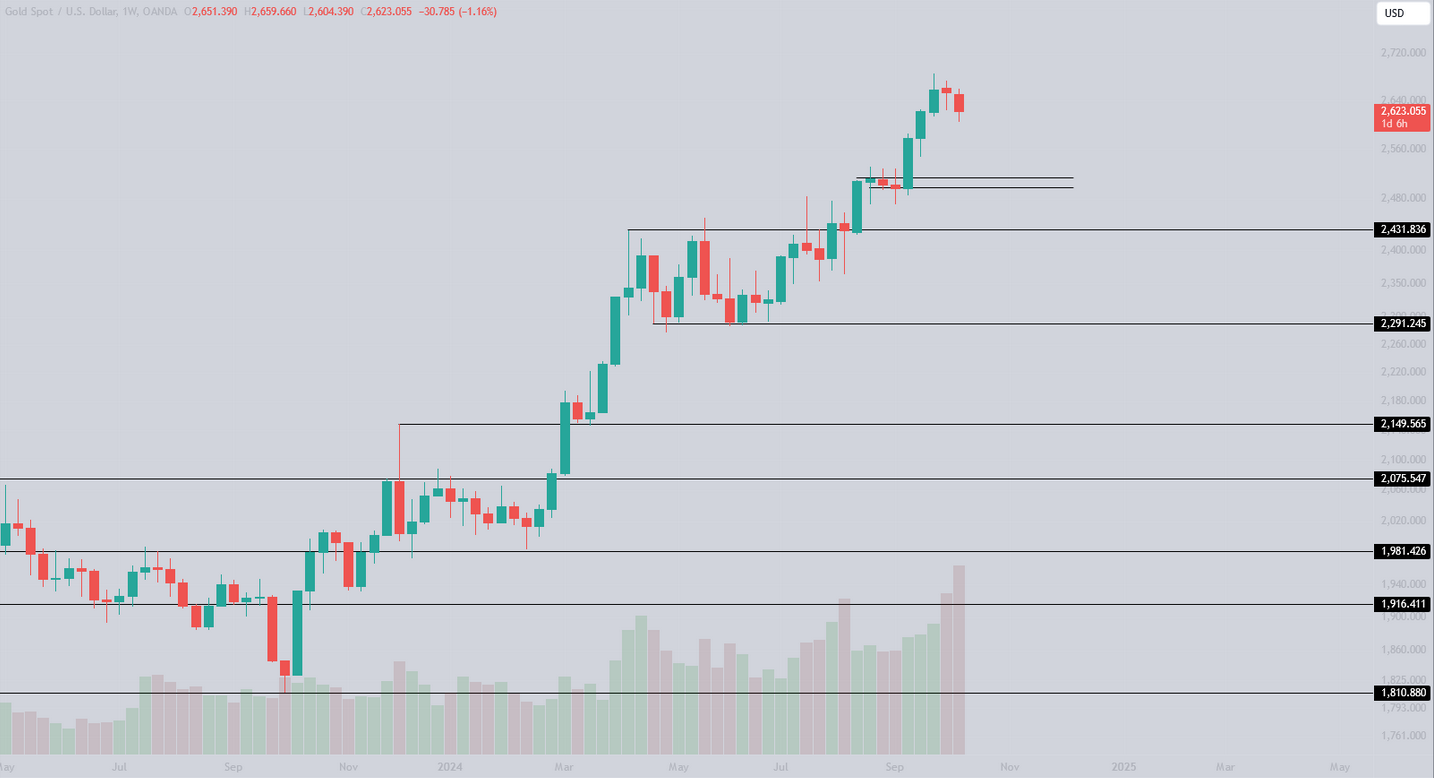
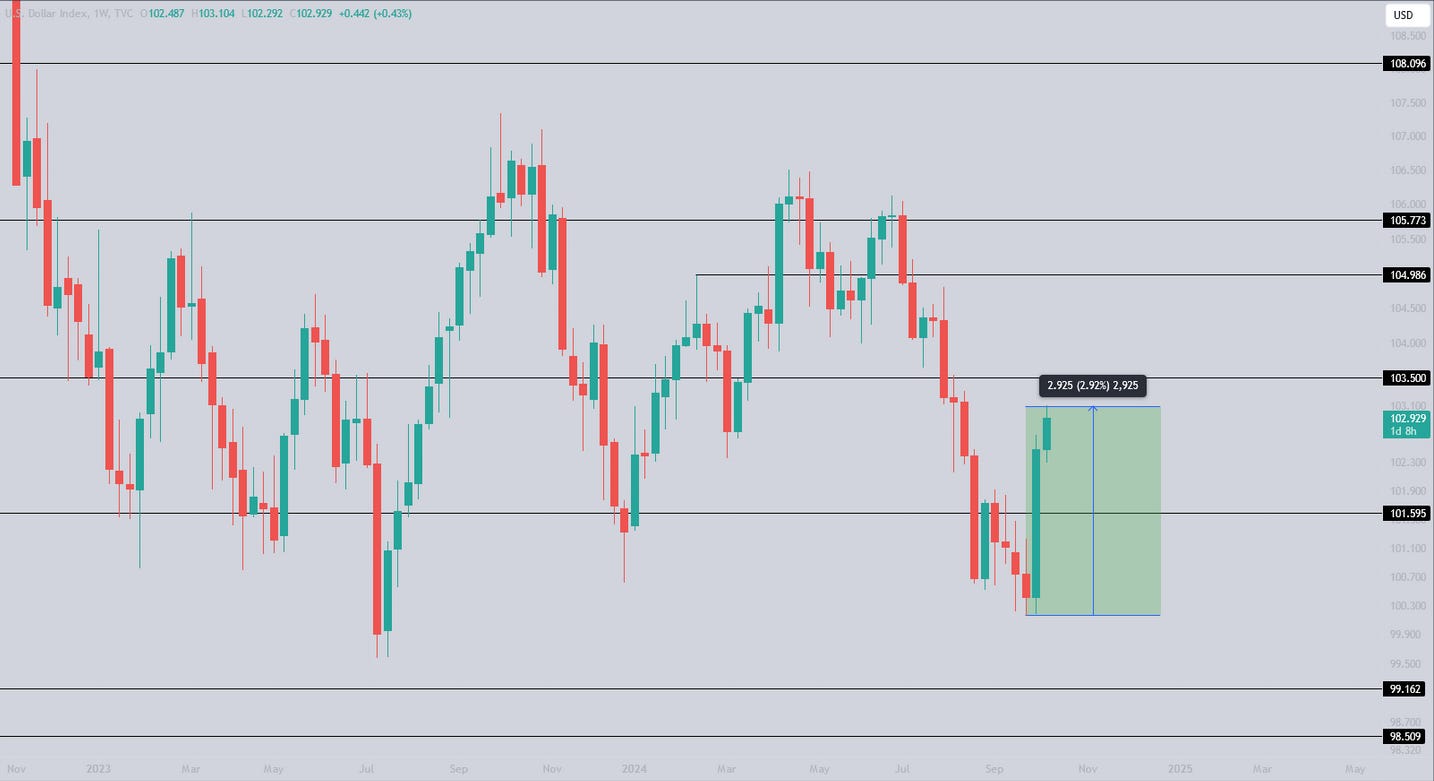
Stocks continue to push into all-time highs, while Gold takes a breather.
The only support I see for Gold right now is around $2,500. DXY has risen from the dead and jumped from 100 to 103, which is a crazy move. I'm eager to see how this will affect risk-on markets in the near future.
Ethereum
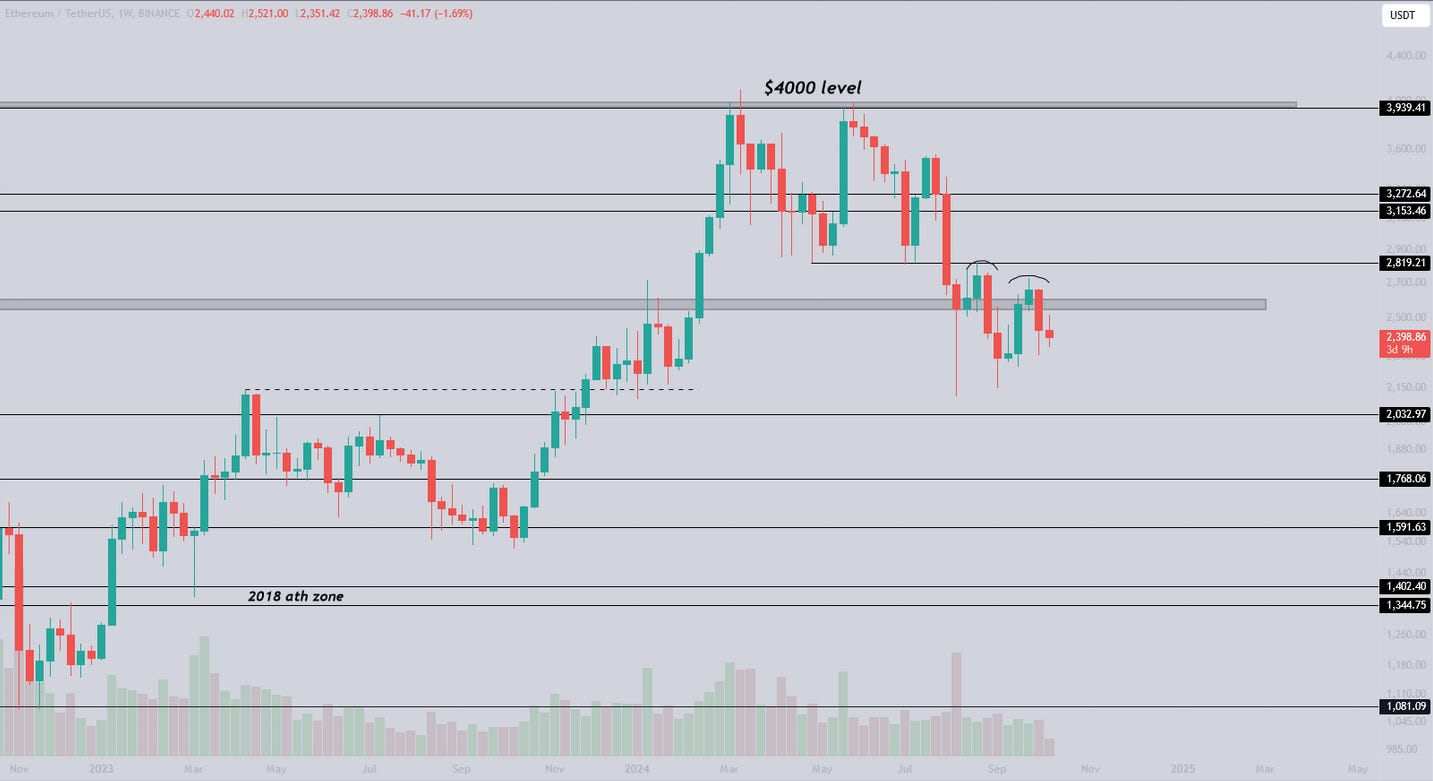
Ether is unable to break above $2,600.
While Bitcoin managed to print a higher high, Ether failed. Both assets tried to break over important levels and were rejected. Ether is not showing any signs of strength, which is nothing new at this point. At the time of writing, ETH trades around $2,400, which is not an ideal place to bid. I will be patient and place my bids slightly above $2,000 as long as it stays below the major weekly level at $2,600.
Concluding notes
The U.S. elections are weeks away, so it’s no surprise that a lot of attention is focused on the presidential race. Trump is embracing crypto full-on, but in a way that looks a bit too controversial to many within the industry. Since early August, when his sons, Eric and Donald Jr., first teased a Trump-backed DeFi protocol, there has been more and more talk about what was to become World Liberty Financial. Donald Trump himself started promoting the project on social media, but given that it’s only in the whitelist stage (with only a recent governance proposal to launch an Aave v3 instance), it’s hard to say exactly what it will look like.
In any case, many people in crypto have divided opinions on this, and it’s easy to see why. On the one hand, launching a DeFi project doesn’t exactly sound like something appropriate for a former president who is trying to get elected again, and if it fails or performs poorly (due to security vulnerabilities or just predatory tokenomics), that could have outsized negative consequences for the whole industry in the event that Trump loses the election. But on the other hand, Trump is now completely committed to his pro-crypto stance: unlike mere promises made in an election campaign, which any politician can conveniently forget after taking office, actually getting some skin in the game means that Trump will have to make a drastic positive change to crypto regulations if he wins—even (or especially) if his DeFi project isn’t a complete success.